Lion
Panthera leo
Overview
The lion (Panthera leo) is a majestic species in the family Felidae and one of the 'big cats' in the genus Panthera. It is highly muscular with a deep chest, a short, rounded head, and reduced neck compared to other cats. One of the most recognizable symbols in human culture, the lion has been depicted in everything from cave paintings to modern national flags. Known as the 'King of Beasts', lions are apex predators that play a crucial role in maintaining the balance of their ecosystems by regulating prey populations. Unlike other cats, they are highly social, living in groups called prides, which can include up to 30 individuals.
Fun Fact
A lion's roar can be heard from up to 8 kilometers away, and they can run at speeds of up to 80 km/h in short bursts.
Physical Characteristics
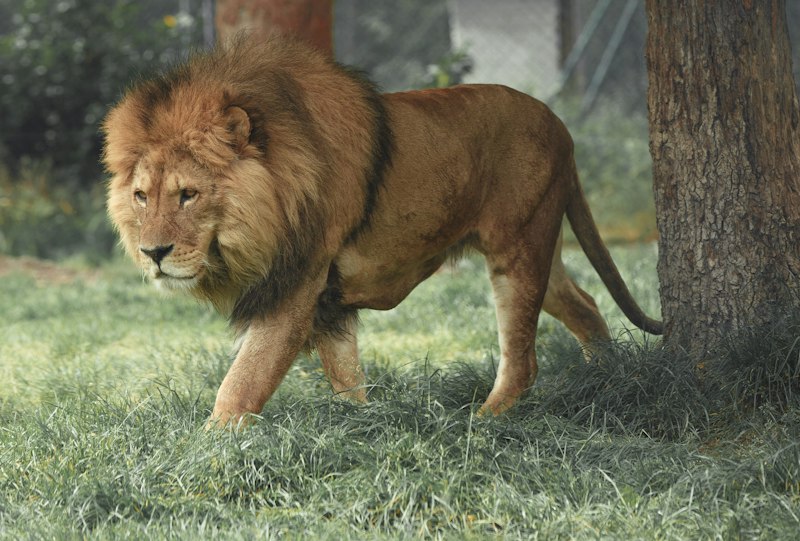
Lions possess a powerful muscular build adapted for strength rather than sustained speed. Males are significantly larger than females, weighing up to 250 kg, and are easily distinguished by their thick manes which protect their necks during fights. The mane's color can range from blond to black and serves as an indicator of the lion's age and health to rivals and potential mates. Their coat is typically yellow-gold, providing excellent camouflage in the dry grass of the savannah.
Behavior & Ecology
Lions are unique among felids as they are the only ones that live in complex social groups called prides. A pride typically consists of several related females, their cubs, and a few resident males who defend the territory. While the females do most of the cooperative hunting, usually at night or dawn, the males are responsible for defending the pride's territory from intruders and rival males. Lions spend up to 20 hours a day resting to conserve energy for hunting and patrolling.
Diet & Hunting Strategy
Lions are generalist hypercarnivores. Their diet consists mainly of large mammals weighing between 190-550 kg, such as wildebeest, zebras, buffalo, and gemsbok. A single lion needs about 5 to 7 kg of meat per day, but they are capable of eating up to 30 kg in one sitting after a successful hunt. They also scavenge when the opportunity arises, often stealing kills from hyenas or leopards.
Reproduction & Life Cycle
Lions do not have a specific breeding season and can mate throughout the year. After a gestation period of about 110 days, the female gives birth to a litter of one to four cubs. Cubs are born blind and vulnerable, kept in a safe den for the first few weeks. All lactating females in a pride will suckle any cub, a behavior known as 'alloparenting', which increases the survival rate of the offspring.
Human Interaction
Lions have been admired by humans for millennia as symbols of courage, royalty, and strength. However, they are also dangerous to humans, and negative interactions often occur in areas where lion territory overlaps with agricultural land. Sustainable tourism involving lions contributes significantly to the economy of many African countries, incentivizing their conservation.
FAQ
What is the scientific name of the Lion?
The scientific name of the Lion is Panthera leo.
Where does the Lion live?
Lions primarily inhabit grasslands, savannahs, and open woodlands, but they can also be found in dense bush and even semi-desert areas. Historically, they ranged across most of Africa, parts of Europe, and Asia. Today, their range is fragmented and mostly restricted to Sub-Saharan Africa, with a small, isolated population of Asiatic lions living in the Gir Forest National Park in Gujarat, India.
What does the Lion eat?
Carnivore (primarily large ungulates). Lions are generalist hypercarnivores. Their diet consists mainly of large mammals weighing between 190-550 kg, such as wildebeest, zebras, buffalo, and gemsbok. A single lion needs about 5 to 7 kg of meat per day, but they are capable of eating up to 30 kg in one sitting after a successful hunt. They also scavenge when the opportunity arises, often stealing kills from hyenas or leopards.
How long does the Lion live?
The lifespan of the Lion is approximately 10-14 years in the wild; up to 20 years in captivity..