Tiger
Panthera tigris
Overview
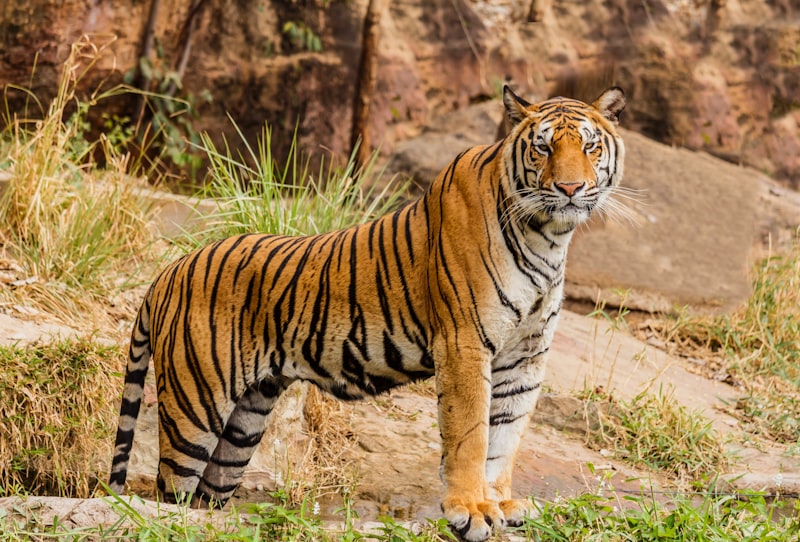
The tiger (Panthera tigris) is the largest living cat species and a member of the genus Panthera. It is most recognizable for its dark vertical stripes on orange-brown fur with a lighter underside. As an apex predator, it plays a key role in maintaining the health of the ecosystems it inhabits.
Fun Fact
Unlike most members of the cat family, tigers are excellent swimmers and actually enjoy bathing in water to cool off.
Physical Characteristics
A muscular body with powerful forelimbs and a large head. Each tiger's stripe pattern is unique, much like human fingerprints. Their night vision is six times better than a human's.
Behavior & Ecology
Tigers are generally solitary and territorial animals. They mark their territory with urine and secretions, and through scratch marks on trees. They are ambush predators.
Diet & Hunting Strategy
Tigers hunt medium to large-sized animals such as wild boar, deer, and water buffalo. A single tiger can consume up to 40 kg of meat in one sitting.
Reproduction & Life Cycle
Cubs are born in litters of two to four. They stay with their mother for about two years before establishing their own territory. Mortality rates for cubs are high.
Human Interaction
Tigers are both respected and feared. Human-tiger conflict is a significant issue in areas where human settlements expand into tiger territories.
FAQ
What is the scientific name of the Tiger?
The scientific name of the Tiger is Panthera tigris.
Where does the Tiger live?
Tigers primarily live in diverse forests, from Siberian taiga to tropical mangrove swamps in Bengal and rainforests in Indonesia. They require dense vegetation for camouflage, sufficient prey, and proximity to water.
What does the Tiger eat?
Carnivore (Apex predator). Tigers hunt medium to large-sized animals such as wild boar, deer, and water buffalo. A single tiger can consume up to 40 kg of meat in one sitting.
How long does the Tiger live?
The lifespan of the Tiger is approximately 10-15 years in the wild..