Leatherback Sea Turtle
Dermochelys coriacea
Overview
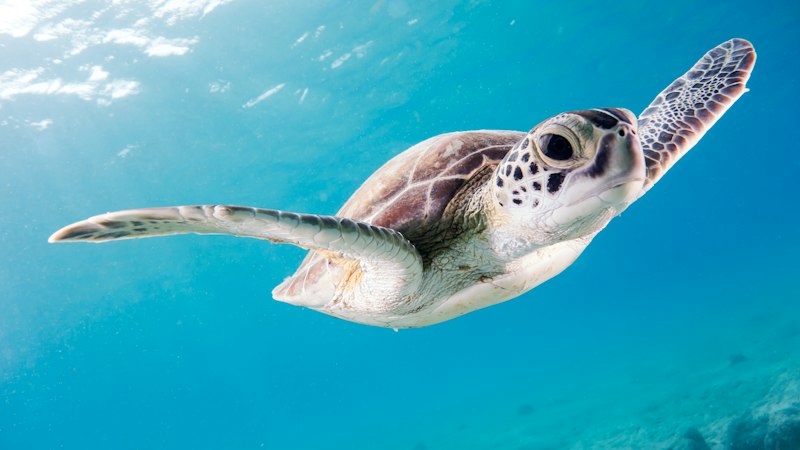
The leatherback is the largest of all living turtles and the fourth-heaviest modern reptile. Unlike other sea turtles, it lacks a hard, bony shell.
Fun Fact
They can dive deeper than 1,000 meters and regulate their body temperature to survive in cold water, unlike most reptiles.
Physical Characteristics
Instead of a shell, their back is covered by oily, rubbery skin reinforced by tiny bone plates. They can weigh up to 700 kg.
Behavior & Ecology
Highly migratory, they travel thousands of miles between feeding and nesting grounds.
Diet & Hunting Strategy
They are gelatinous prey specialists, feeding almost exclusively on jellyfish and salps.
Reproduction & Life Cycle
Females return to tropical beaches to lay clutches of billiard-ball-sized eggs.
Human Interaction
Often caught accidentally in fishing gear or killed by ingesting plastic bags mistaken for jellyfish.
FAQ
What is the scientific name of the Leatherback Sea Turtle?
The scientific name of the Leatherback Sea Turtle is Dermochelys coriacea.
Where does the Leatherback Sea Turtle live?
Open oceans worldwide, from Alaska to New Zealand.
What does the Leatherback Sea Turtle eat?
Carnivore (Jellyfish eater). They are gelatinous prey specialists, feeding almost exclusively on jellyfish and salps.
How long does the Leatherback Sea Turtle live?
The lifespan of the Leatherback Sea Turtle is approximately 45-50 years..