Great Horned Owl
Bubo virginianus
Overview
The great horned owl is a large owl native to the Americas. It is an extremely adaptable bird with a vast range and is the most widely distributed true owl in the Americas.
Fun Fact
They have a grip strength of 200-500 psi, comparable to the bite force of a large dog, allowing them to sever the spines of prey.
Physical Characteristics
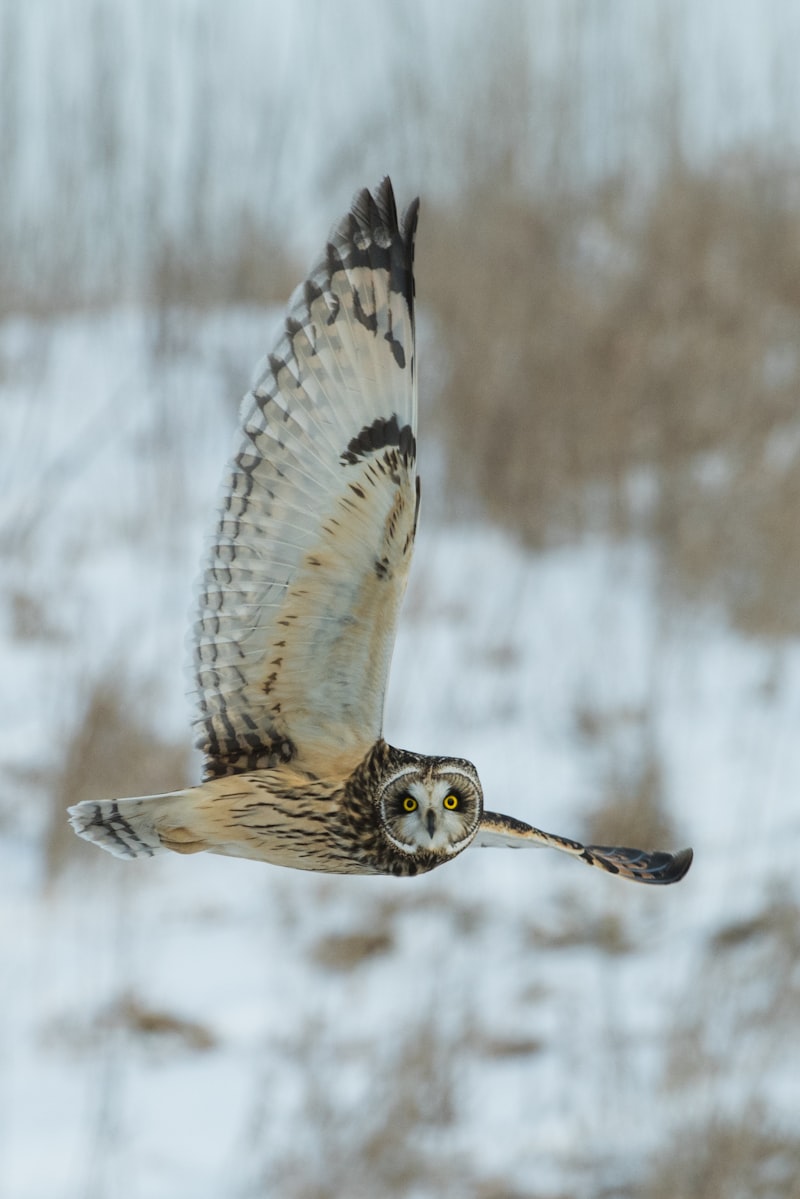
Large ear tufts ('horns'), yellow eyes, and mottled brown/grey feathers for camouflage.
Behavior & Ecology
Nocturnal ambush hunters. They are fierce and aggressive defenders of their nests.
Diet & Hunting Strategy
One of the most diverse diets of any raptor: rabbits, rodents, skunks (they have no sense of smell), and even other owls.
Reproduction & Life Cycle
They do not build their own nests but take over old nests of hawks or crows.
Human Interaction
Often seen as a symbol of wisdom, but farmers historically considered them pests for eating poultry.
FAQ
What is the scientific name of the Great Horned Owl?
The scientific name of the Great Horned Owl is Bubo virginianus.
Where does the Great Horned Owl live?
Found in almost every habitat in North and South America, from Arctic tundra to deserts and rainforests.
What does the Great Horned Owl eat?
Carnivore (Raptor). One of the most diverse diets of any raptor: rabbits, rodents, skunks (they have no sense of smell), and even other owls.
How long does the Great Horned Owl live?
The lifespan of the Great Horned Owl is approximately 13-15 years in the wild..