Emperor Penguin
Aptenodytes forsteri
Overview
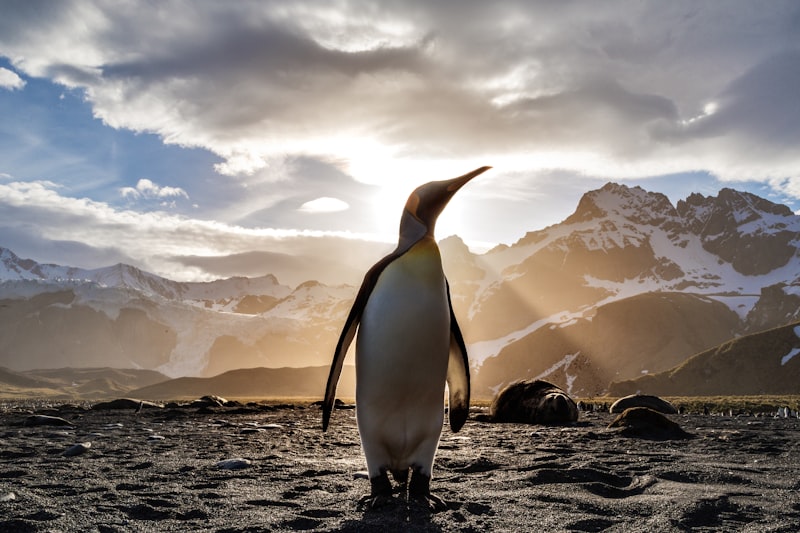
The emperor penguin (Aptenodytes forsteri) is the tallest and heaviest of all living penguin species and is endemic to Antarctica. They are renowned for their incredible endurance and ability to survive in one of the harshest environments on Earth. Unlike other bird species, they do not build nests but incubate their eggs on their feet.
Fun Fact
Emperor penguins can dive to depths of over 500 meters and stay submerged for up to 22 minutes, reducing their heart rate to conserve oxygen.
Physical Characteristics
They have streamlined bodies and wings stiffened into flippers for swimming. Their plumage provides excellent insulation with four layers of scale-like feathers that are waterproof and windproof. They stand about 100-122 cm tall.
Behavior & Ecology
Famous for their cooperative behavior, they huddle together in large groups to conserve heat during winter storms, rotating positions so every bird gets a turn in the warm center. They are excellent swimmers and divers.
Diet & Hunting Strategy
They primarily hunt Antarctic silverfish, krill, and various squid. They use a technique where they dive deep and swim back up toward the surface to spot prey silhouetted against the ice.
Reproduction & Life Cycle
The female lays a single egg in May or June and passes it to the male, who incubates it on his feet under a brood pouch for about 64 days while the female goes to sea to feed. The male fasts during this entire period.
Human Interaction
They are mostly isolated from humans due to their remote habitat, but are iconic figures in documentaries like 'March of the Penguins' and are indicators of Antarctic climate health.
FAQ
What is the scientific name of the Emperor Penguin?
The scientific name of the Emperor Penguin is Aptenodytes forsteri.
Where does the Emperor Penguin live?
Antarctic ice shelves and the surrounding seas. They are the only bird species that breeds during the harsh Antarctic winter, enduring temperatures as low as -60°C.
What does the Emperor Penguin eat?
Fish, crustaceans, and cephalopods. They primarily hunt Antarctic silverfish, krill, and various squid. They use a technique where they dive deep and swim back up toward the surface to spot prey silhouetted against the ice.
How long does the Emperor Penguin live?
The lifespan of the Emperor Penguin is approximately 15-20 years in the wild..